


What happens when food moves from the farm to the consumer through fewer hands, better storage and a more organised distribution system?
The Lagos State Government believes the answer could be lower food prices, fewer post-harvest losses and more jobs.
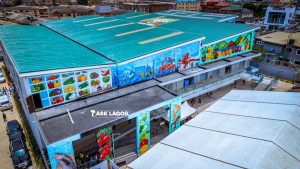
Governor Babajide Sanwo-Olu stated this on Wednesday while commissioning the Lagos Fresh Food Hub at Pen Cinema, Agege, describing the facility as a key part of the state’s strategy to build a more efficient and affordable food system.
According to the governor, the network of food hubs being developed across Lagos is designed to shorten the journey food takes before reaching consumers, reduce unnecessary layers of middlemen and provide better facilities for storing, handling and distributing agricultural produce.
And Lagos says there is already evidence that the model can work.
The Fresh Food Hub in Mushin, commissioned in December 2023, has recorded more than ₦4 billion in transactions across 228 market days, with over 850 registered vendors and more than 7,000 direct and indirect jobs created, Sanwo-Olu said.
For the governor, the hubs are therefore about much more than providing another place to sell food.
“Well-designed market infrastructure does far more than provide a place to sell food,” he said, noting that such facilities can improve farmers’ incomes, reduce post-harvest losses, create jobs and strengthen local economies.
The Agege hub is expected to serve residents of Agege and neighbouring communities while connecting them to a wider food distribution network across Lagos.
The state began rethinking its food system in 2021, according to Sanwo-Olu, after recognising that feeding a rapidly growing megacity required more than simply increasing food production.
The strategy is based on a hub-and-spoke model.
At the centre is the Central Food Security Systems and Logistics Hub, which serves as the major aggregation and logistics platform. From there, food can move to smaller hubs closer to communities.
That means facilities in Agege, Abijo, Mushin and other locations are not being developed as standalone markets. They are intended to operate as interconnected parts of one food distribution system.
So, what problem is Lagos trying to solve?
Poor storage, post-harvest losses, inefficient food transportation, traffic generated by food logistics and inadequate trading conditions are among the challenges the network is designed to address.
Commissioner for Agriculture and Food Systems, Abisola Olusanya, said the Agege hub was developed in partnership with Origin Tech Group to make the movement of food into and across Lagos more efficient.
She said the Mushin facility provided the first opportunity to test the model and later became an important platform for the state’s food subsidy intervention during the period of significant food inflation in 2024.
That experience, she added, contributed to the development of the Ounje Eko Food Discount Market, which was eventually rolled out across 66 locations in Lagos.
And the Agege facility is built to handle significant volumes.
The hub occupies about 7,000 square metres, with a 4,000-square-metre trading floor capable of accommodating between 350 and 400 vendors.
It also has about 1,200 square metres of dry storage, with capacity for approximately 800 metric tonnes of produce, alongside about 300 metric tonnes of cold storage for fresh food.
There is also a dedicated seafood section, parking for 80 to 90 vehicles and 10 electric vehicle charging points.
For Lagos, the bigger ambition is clear: build a food system where produce can move more efficiently, farmers and traders can operate in better conditions, and consumers can ultimately benefit from a more reliable supply of affordable food.
The question now is how far this network can go in changing the way food moves — and how much of that efficiency will eventually reflect in the prices Lagos residents pay at the market.
Leave a Reply