


…Governor says Lagos’ development has been driven by vision, self-reliance, partnership and continuity
What exactly should replace a system that has delivered results?
That was the challenge Lagos State Governor Babajide Sanwo-Olu put before opposition parties as he urged them to present credible alternatives rather than simply campaign for a change of government.
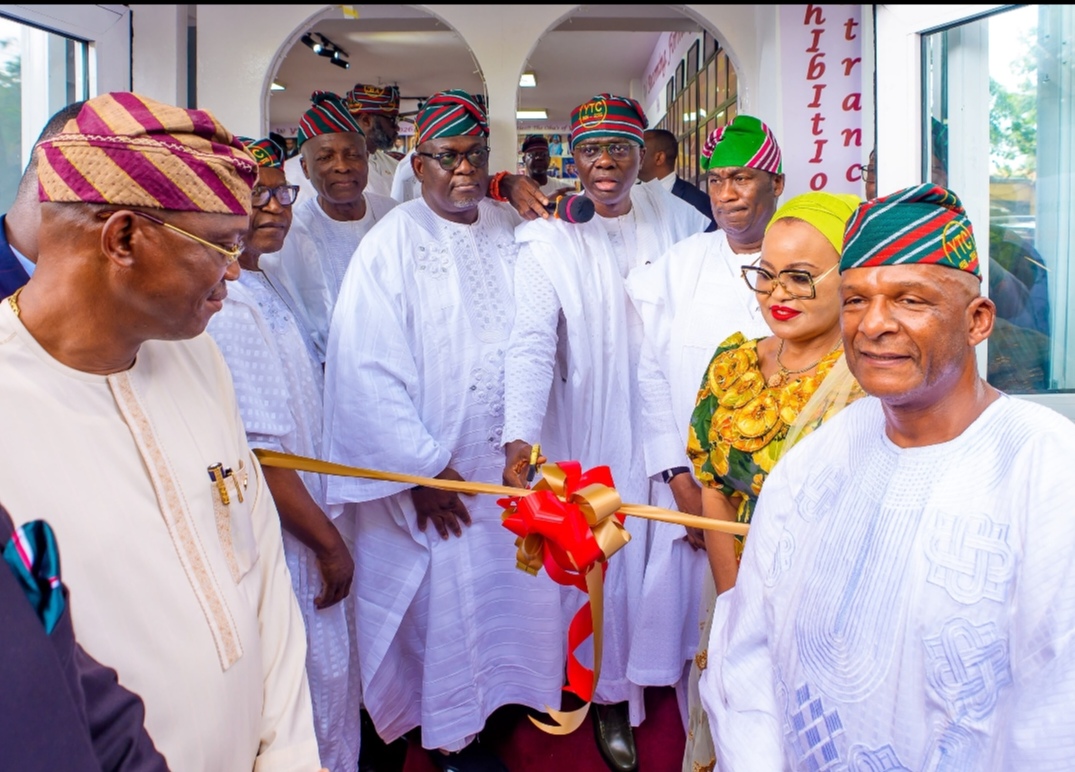
Sanwo-Olu spoke on Tuesday while delivering the centenary anniversary lecture of the Yoruba Tennis Club, Onikan, Lagos, with the theme “Democracy, Governance, and the Lagos Spirit: A Century of Excellence.”
The Governor argued that Lagos’ development over the years has been shaped by continuity, with successive administrations building on long-term plans rather than discarding them whenever leadership changes.
“PUT FORWARD CREDIBLE IDEAS”
Sanwo-Olu said opposition parties seeking to replace the ruling All Progressives Congress (APC) should demonstrate how their ideas can deliver better outcomes for Lagosians.
“Our challenge to the opposition remains the same – to put forward credible ideas that are able to compete with ours, instead of seeking change for the sake of change.”
He said Lagos had already experienced the benefits of continuity and should not abandon tested development strategies for what he described as “untested novelty.”
The Governor also linked the argument to the Federal Government’s reforms under President Bola Ahmed Tinubu, saying the gains of the reforms were becoming visible in areas including foreign exchange, education, agriculture and security.
THE “LAGOS SPIRIT”
For Sanwo-Olu, the story of Lagos cannot be separated from what he described as the “Lagos Spirit” — courage, self-reliance, openness, partnership and a determination to keep improving.
He recalled moments in the state’s history when Lagos responded to exclusion or difficult circumstances by developing its own solutions.
“The Lagos Spirit is the spirit of a city that does not wait to be given.”
From the establishment of indigenous institutions during the colonial era to Lagos’ role in the June 12 pro-democracy struggle and its response to the withholding of federal allocations in the early 2000s, the Governor said the city had repeatedly demonstrated its capacity to create alternatives.
THE LAGOS PLAYBOOK
Sanwo-Olu identified four habits which, according to him, have shaped Lagos’ approach to governance.
Vision. He said successive administrations had largely maintained the development blueprint established after the return to democracy in 1999, allowing projects and policies to continue beyond individual administrations.
He cited the Blue and Red Rail Lines as examples of what continuity can achieve over time.
Self-reliance. The Governor pointed to Lagos’ reforms in tax administration and internally generated revenue, saying the state chose to strengthen its own fiscal capacity rather than depend entirely on federal allocations.
Partnership. He said Lagos’ development has also been driven by collaboration between government, businesses, communities and institutions.
Impact. Most importantly, Sanwo-Olu said governance must ultimately be judged by how ordinary people experience it.
“The true measure of our work in Lagos is whether a doctor or nurse in Alimosho or Ibeju-Lekki can get to work on time, whether a child in Ajegunle has a desk and school books, whether a trader in Mile 12 can get her tomatoes or fish to market before they rot.”
SEVEN YEARS OF THEMES+
Reflecting on his administration’s seven years in office, Sanwo-Olu highlighted projects and interventions across transportation, healthcare, education, technology, food security, infrastructure, security and the economy.
He pointed to the establishment of two new public universities, the Imota Rice Mill, investments in submarine cable infrastructure and data centres, the planned children’s hospital and the Lagos Central Food Security System and Logistics Hub in Ketu-Ereyun.
According to the Governor, these interventions form part of the administration’s broader THEMES+ development agenda.
100 YEARS OF THE YORUBA TENNIS CLUB
The lecture also provided an opportunity to reflect on the history of the Yoruba Tennis Club, which is marking its centenary.
Sanwo-Olu described the establishment of the club as an expression of courage and self-belief by indigenous Lagosians during a period of racial segregation.
He urged the club to preserve its heritage while adapting to changing times, calling for greater inclusion of young people, stronger documentation of its history and high standards in admitting new members.
“A GENTLEMAN IN THE SERVICE OF LAGOSIANS”
Chairman of the Yoruba Tennis Club, Chief Olawunmi Gasper, praised Sanwo-Olu’s administration for its development initiatives and described the Governor as a progressive leader, public-sector reformer and advocate of people-centred development.
Gasper described Sanwo-Olu as “a technocrat in politics, a gentleman in the service of Lagosians”, while highlighting the Governor’s focus on infrastructure, productivity, connectivity, innovation and global competitiveness.
THE BIGGER CONVERSATION
Beyond the politics of 2027, Sanwo-Olu’s argument puts continuity at the centre of Lagos’ development debate.
Should governments continue policies and projects that are working, or should every new administration chart an entirely different course?
For the Governor, Lagos’ experience offers a clear answer: development requires a long-term vision, and political competition should be about who has the better plan to move that vision forward.
Ask Lagos — because when politicians ask Lagosians for their votes, the bigger question is simple: what is your plan, and can it deliver better than what is already on the ground?
Leave a Reply