


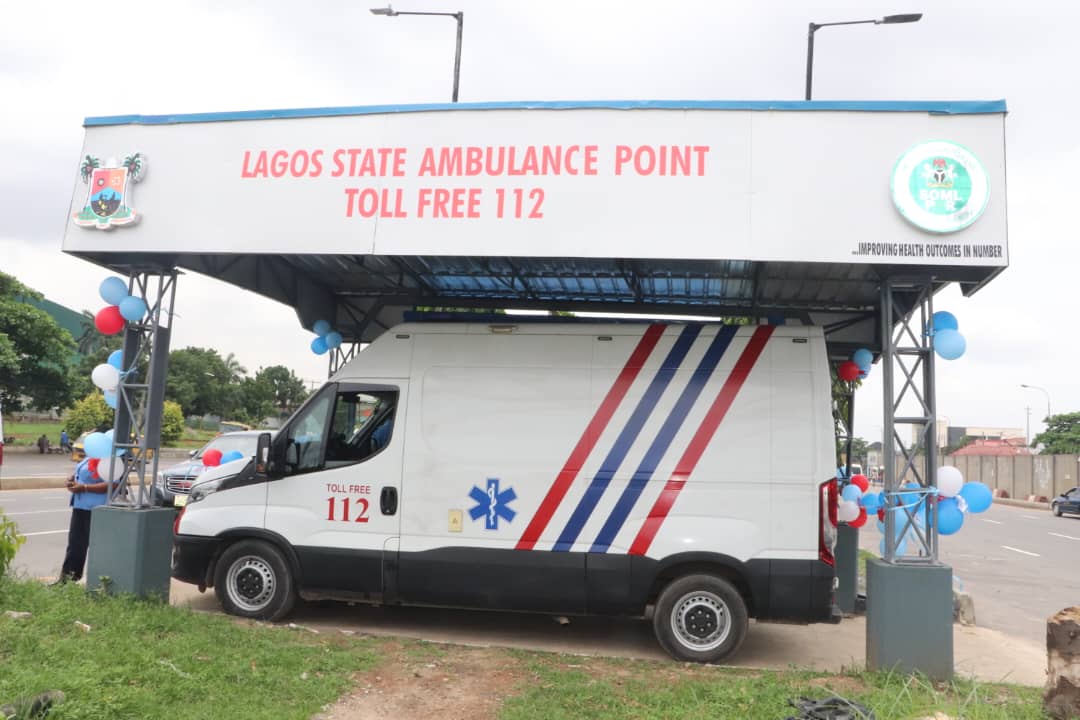
What would happen if you dialled 112 during an emergency? Would help arrive in time? That question took centre stage at the latest Ask Lagos X Space, where government officials and residents examined the strengths, challenges and future of emergency response in Africa’s largest city.
From road accidents and medical emergencies to fires, floods and building collapses, the conversation highlighted how Lagos is strengthening its emergency management system through technology, improved coordination and faster response strategies.
Speaking during the session, the Commissioner for Information and Strategy, Gbenga Omotoso, explained that emergency response in Lagos is no longer the responsibility of a single agency but a coordinated network of institutions working together to protect lives and property.
According to him, the network includes the Lagos State Emergency Management Agency (LASEMA), Lagos State Ambulance Service (LASAMBUS), Lagos State Fire and Rescue Service, Lagos State Traffic Management Authority (LASTMA), Lagos Neighbourhood Safety Corps, the Nigeria Police emergency units and the Lagos State Safety Commission.
Omotoso said the state has invested significantly in a central command-and-control centre, CCTV surveillance, GPS tracking and modern communication systems that enable emergency calls to be routed quickly to the appropriate agency.
“Emergency calls are received at the command centre before being assigned to the appropriate agency, whether it is the Fire Service, LASAMBUS or LASEMA,” he said.
Also speaking, the Special Adviser to the Governor on Health, Dr. OluKemi Ogunyemi, stressed that the first few minutes after an emergency are often the most critical.
“The first three to five minutes after many emergencies are often the difference between life and death,” she said.
To improve response times, particularly in traffic-prone areas, Ogunyemi disclosed that Lagos has expanded its emergency fleet to about 28 operational ambulances and introduced 10 ambulance motorcycles capable of navigating congested roads to provide immediate medical assistance before ambulances arrive.
She explained that motorcycle paramedics can stabilise patients during minor emergencies while reducing delays caused by heavy traffic.
The Special Adviser also outlined the state’s emergency response process—from receiving emergency calls and conducting medical triage to dispatching the nearest response team and transporting patients to the most suitable hospital. Where a hospital lacks available bed space, patients are transferred to another healthcare facility.
Despite the improvements, both officials acknowledged that significant challenges remain.
Among the biggest obstacles identified were traffic congestion, motorists who fail to give way to emergency vehicles, illegal structures obstructing access routes, prank calls to emergency numbers and unsafe practices such as indiscriminate waste disposal, which contribute to flooding.
Omotoso lamented the growing abuse of emergency hotlines, noting that some residents still call 112 and 767 merely to test whether the numbers are working or to report issues that do not require emergency intervention.
The discussion also revealed that data collected from emergency calls is helping government identify accident-prone locations across Lagos.
According to the officials, road traffic crashes account for the highest number of emergency incidents, prompting government to strengthen collaboration with transport authorities through speed cameras, stricter speed enforcement and improved driver licensing measures.
Dr. Ogunyemi further advocated wider enrolment in the Lagos State Health Insurance Scheme, noting that sustainable healthcare financing remains essential to building a stronger emergency medical system while ensuring vulnerable residents continue to receive emergency care.
Residents who participated in the X Space acknowledged noticeable improvements in emergency response over the years, particularly during medical emergencies and the COVID-19 pandemic. However, they called for increased public awareness, more ambulances and emergency personnel, expanded motorcycle ambulance coverage, improved utilisation of Primary Health Centres and stronger enforcement requiring motorists to give way to emergency vehicles.
The conversation also echoed themes raised during a previous Ask Lagos X Space on waste management, where officials emphasised that preventing blocked drainage channels and improving environmental sanitation remain critical to reducing flooding and improving emergency response across the state.
The consensus from the discussion was clear: while Lagos continues to invest in technology, personnel and infrastructure, building a world-class emergency response system will require not only government action but also responsible behaviour from every resident.
Leave a Reply