


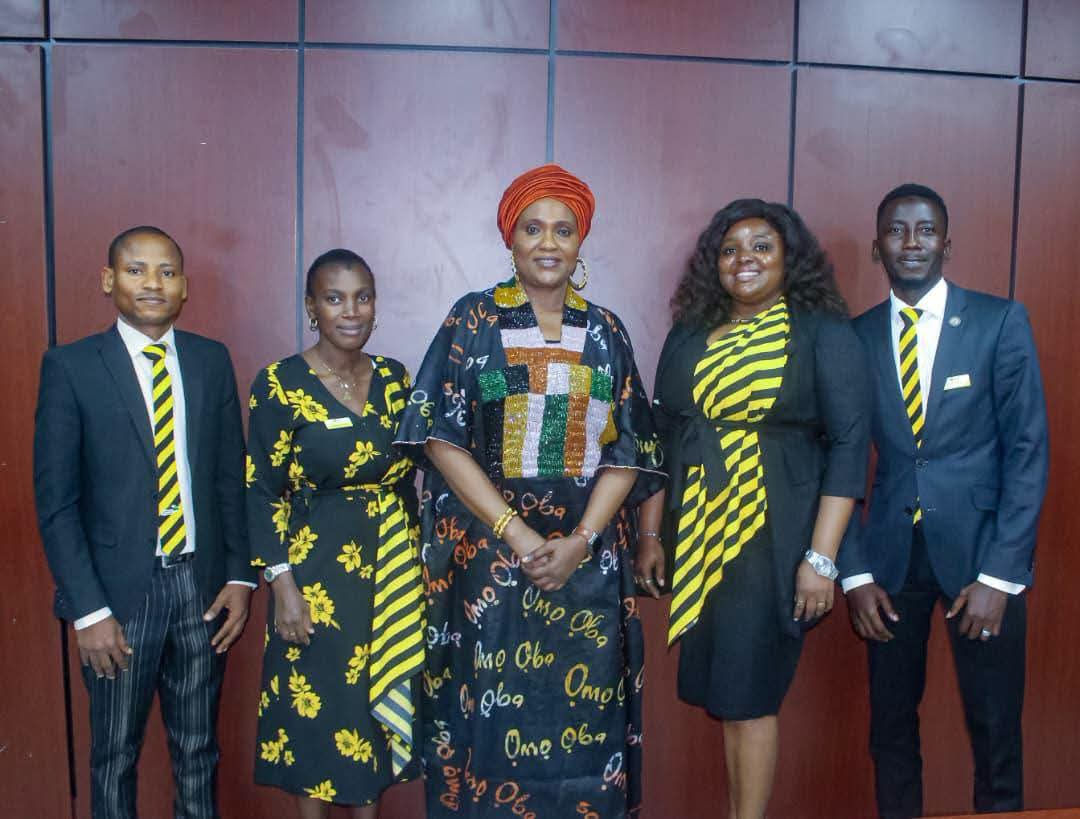
….10 PSAP participants receive practical lessons on integrity, innovation, collaboration and citizen-focused public service
What happens when young public servants are given the opportunity to learn directly from those who have spent years navigating the realities of government?
For Lagos State, the answer is mentorship — and the belief that preparing the next generation of public servants requires more than classroom training.
That was the focus of a mentorship and knowledge-sharing session held at the Lagos State Ministry of Tourism, Arts and Culture, where 10 participants of the Public Service Accelerator Programme (PSAP) were challenged to think beyond their individual roles and understand the responsibility that comes with serving the public.
LEADERSHIP IS MORE THAN A JOB TITLE
Hosting the participants at the Ministry’s Conference Room in Alausa, the Permanent Secretary, Mrs. Bopo Oyekan-Ismaila, described PSAP as an important investment in developing a new generation of public servants capable of responding to emerging governance challenges.
But her message was not simply about career advancement.
She urged the Accelerators to uphold the values of the Lagos State Public Service, including discipline, loyalty, hard work, professionalism, integrity and commitment.
She also stressed that technical competence alone does not make an effective public servant.
The ability to work with people, respect colleagues, build trust and maintain positive relationships with citizens and stakeholders, she said, is equally important.
THE CITIZEN IS THE END USER
At the heart of public service is a simple reality: government exists to serve people.
That means the quality of government is often experienced by citizens not through policy documents, but through everyday interactions — how quickly a process is completed, how an official responds to a complaint, whether a service is accessible and whether people are treated with dignity.
Oyekan-Ismaila therefore encouraged the participants to use the knowledge gained through PSAP to improve processes, introduce innovative ideas and develop practical solutions within their respective Ministries, Departments and Agencies.
Technology, she noted, is also changing how citizens expect government to work.
Public servants must therefore be prepared to learn continuously, adapt and embrace innovation.
LESSONS FROM A CAREER JOURNEY
The Permanent Secretary also shared experiences from her own professional journey, including her transition from the banking sector into public service.
Her message to the participants was that leadership is built over time.
Experience, continuous learning, discipline, integrity and a willingness to serve others, she said, are among the qualities that shape effective leaders.
For the Accelerators, that means the PSAP fellowship should not be viewed simply as another qualification to add to a résumé.
It is an opportunity to develop the mindset required to take on greater responsibilities.
FROM LEARNING TO ‘PASSING IT ON’
PSAP is designed to identify and develop high-potential officers who can become future leaders and change agents within the Lagos State Public Service.
The programme combines structured learning, mentorship, peer engagement and practical problem-solving, with emphasis on leadership, accountability, collaboration, digital transformation, policy implementation and citizen-focused service delivery.
One of its key components is the “Pass It On” session.
The idea is straightforward: knowledge gained by one public servant should not stop with that individual.
Participants are expected to share their experiences, skills and lessons with colleagues and other stakeholders, multiplying the impact of the programme across the public service.
WHY TOURISM, ARTS AND CULTURE?
The mentorship at the Ministry provided the participants with a practical look at administration, institutional management and service delivery within the tourism, arts and culture sector.
That matters because government departments may have different mandates, but the expectations of citizens remain broadly the same:
competence, accountability, responsiveness and results.
The session therefore offered the Accelerators an opportunity to see how leadership principles translate into the day-to-day running of a government institution.
THE BIGGER QUESTION
Training young public servants is one thing.
Creating an environment where they can actually innovate, take responsibility and improve the way government works is another.
PSAP is designed to bridge that gap by preparing high-potential officers for more strategic roles in the Lagos State Public Service.
But its ultimate success will not be measured by how many officers complete the programme.
It will be measured by what changes when those officers return to their desks.
Will processes become faster?
Will citizens receive better service?
Will new ideas be allowed to challenge old ways of doing things?
And will today’s Accelerators become the public-service leaders who tomorrow’s Lagos needs?
Ask Lagos — because sometimes, the real story begins when we ask: are we training public servants for the government we have, or preparing them for the government citizens deserve?
Leave a Reply