


What happens when government acquires private land for major infrastructure projects? In Lagos, the state says those affected should be fairly compensated—a commitment it reaffirmed on Monday with the payment of ₦3.1 billion to hundreds of residents, businesses and institutions whose properties were acquired for public development projects.
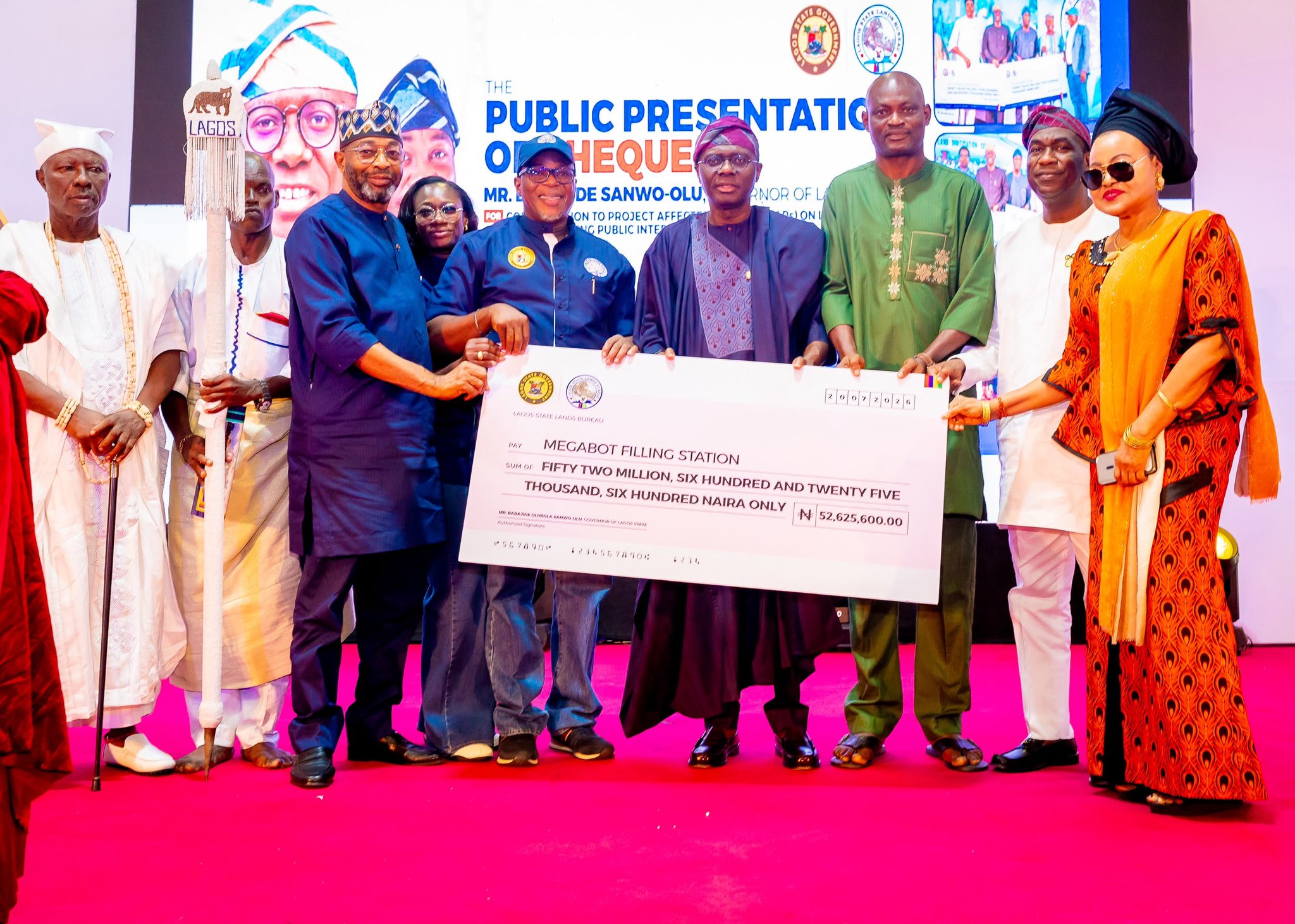
Governor Babajide Sanwo-Olu presented compensation cheques to 331 Project Affected Persons (PAPs), including families, private schools, mosques, filling stations and business owners whose land and properties were acquired across Badagry, Epe, Ikorodu, Igbogbo and Ogba for various infrastructure projects.
The presentation, held at Adeyemi Bero Hall, Alausa, marks the second phase of the state’s compensation programme for residents affected by ongoing road and public infrastructure development.
The beneficiaries include property owners affected by the construction of the Igbe–Bola Ahmed Tinubu Way in Ikorodu, the Agric–Isawo–Konu–Arepo Road realignment, the rehabilitation and upgrade of strategic roads in Epe, and the construction of Hospital Road in Badagry, among other projects.
According to the governor, all compensation claims were subjected to a rigorous verification process involving enumeration, professional valuation by registered estate surveyors and confirmation of land titles to ensure that payments reached the rightful beneficiaries.
Sanwo-Olu said the acquisitions were carried out under the provisions of Sections 28 and 29 of the Land Use Act, which empower government to acquire land for overriding public interest while making adequate compensation a legal and moral obligation.
«”Today, we are presenting cheques totalling ₦3.1 billion to 331 Project Affected Persons whose land and property were acquired for strategic road projects across our state. We are not merely presenting compensation cheques; we are reaffirming a principle that development must always have a human face,” the governor said.»
He stressed that every parcel of land represents the livelihood and history of individuals and communities, adding that the compensation exercise was not an act of charity but the fulfilment of a legal right.
«”The compensation is not charity; it is justice. It is not a favour; it is the right of the beneficiaries. Any progress that overlooks people cannot endure, and development that ignores justice cannot command public trust,” he added.»
While acknowledging that financial compensation cannot fully replace the value of ancestral land and long-held properties, Sanwo-Olu thanked the beneficiaries for their cooperation, noting that their sacrifice would pave the way for projects that would benefit millions of Lagos residents.
He said the completed and ongoing projects have already improved road connectivity, reduced travel time and created new economic opportunities across the affected communities.
Addressing the beneficiaries, the governor described them as partners in the state’s development, assuring them that their contributions would remain part of Lagos’ growth story.
Also speaking, the Permanent Secretary of the Lagos State Lands Bureau, Mr. Kamal Olowoshago, said land remains one of the most valuable assets in Lagos, making it necessary for government to provide fair compensation whenever properties are acquired for public purposes.
He explained that the exercise builds on an earlier compensation programme conducted in 2024 and demonstrates the Sanwo-Olu administration’s commitment to fairness, transparency, accountability and compliance with the law.
According to Olowoshago, the exercise reflects a governance approach where infrastructure development and compassion go hand in hand, ensuring that those affected by public projects are not left behind.
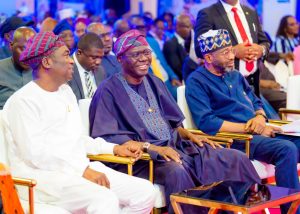
The event was attended by Deputy Governor Dr. Obafemi Hamzat, members of the State Executive Council, permanent secretaries, traditional rulers from the affected communities, beneficiaries and their families.
Leave a Reply