


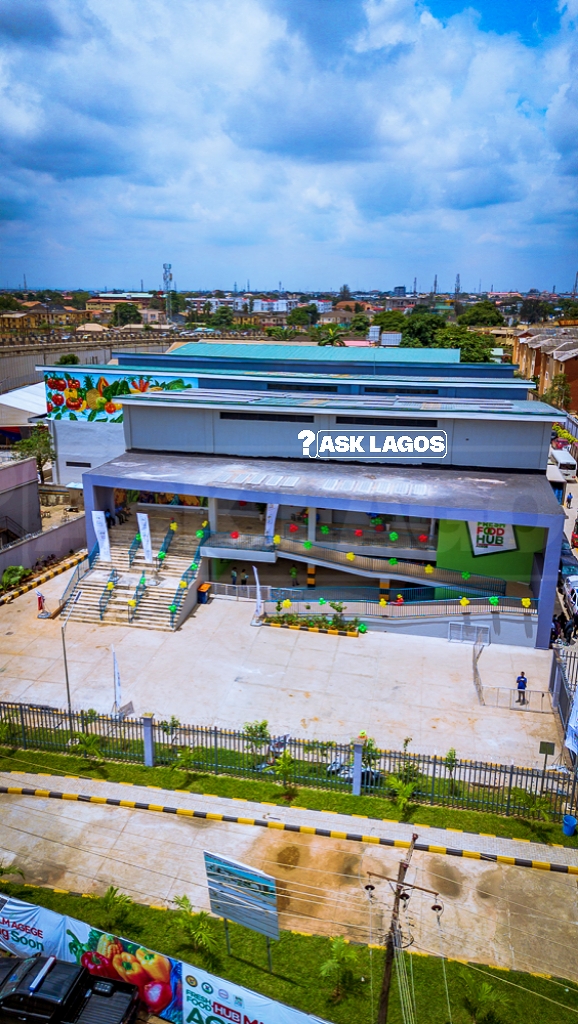
When food travels from the farm to a Lagos kitchen through several layers of traders, spends days in traffic and has nowhere to be properly stored, who ultimately pays the price?
The Lagos State Government believes the answer is the consumer.
That is why the state is betting on a network of Fresh Food Hubs designed to change how food is aggregated, stored, transported and sold across Lagos.
The strategy took centre stage during the latest #AskLagos X Space, titled “Fresh Food Hubs: Can Lagos Win the Food Security Battle?”, where residents questioned the government on food prices, middlemen, infrastructure, jobs and whether the ambitious plan can actually deliver cheaper food.
Food Security Is More Than Growing Food
Commissioner for Agriculture and Food Systems, Abisola Olusanya, said Lagos cannot solve its food security challenge simply by producing more food.
“Food security goes beyond production,” she said, explaining that it also involves how food is transported, stored, processed, traded and ultimately made available to households at affordable prices.
For Lagos, that means building a system where food is available, affordable, nutritious, safe and accessible, regardless of a household’s economic circumstances.
And that is where the hub-and-spoke model comes in.
So, How Will the Hubs Work?
At the centre of the system is the Central Food Security Systems and Logistics Hub in Epe, which will serve as the major aggregation and logistics platform.
From there, food will move to middle-level hubs located closer to communities, including Agege, Abijo and Mushin.
The idea is simple: bring the food closer to the consumer while reducing unnecessary movement, waste and inefficiencies along the supply chain.
The newly commissioned Agege Fresh Food Hub occupies about 7,000 square metres, with 1,200 square metres of dry storage capable of holding about 800 metric tonnes and 300 metric tonnes of cold storage.
The facility can also accommodate between 350 and 400 vendors.
But infrastructure alone does not guarantee cheaper food.
Can the Hubs Avoid Becoming Abandoned Projects?
That was one of the concerns raised during the conversation.
Olusanya acknowledged that changing an established food-trading system will not happen overnight.
She said stakeholder engagement would be critical, particularly because people tend to resist changes to systems they have operated in for years.
To improve sustainability, Lagos is moving towards Public-Private Partnership management of the hubs.
Under the proposed arrangement, private managers will handle areas such as facility management, food safety, traceability, inventory and waste disposal, while the hubs are expected to operate from Monday to Saturday rather than only on selected market days.
The Central Hub in Epe is being developed under a Design-Build-Finance-Operate-Transfer (DBFOT) model and is projected to service more than 1,500 trucks daily and handle about 1.5 million metric tonnes annually.
What Happens to Mile 12 and Traditional Traders?
Another concern from residents was whether the new hubs would eventually push out established food markets and traders.
The government’s answer: No.
The objective, officials explained, is to organise and improve the existing food-trading ecosystem rather than eliminate it.
The hubs are expected to introduce better traceability, allowing consumers to know where food came from, how it was handled and how long it was stored.
There is also a push towards standardised measurements, such as kilograms, instead of informal measurements like derica and paint buckets.
For consumers, that could mean greater transparency when buying food.
Can Food Hubs Create Jobs Too?
The government is also positioning the hubs as employment centres.
Beyond traditional trading, opportunities could emerge for last-mile distributors, food assemblers, online retailers, logistics operators and delivery partners.
The Lagos Agripreneurship Programme, according to officials, has already trained more than 15,000 young people in agribusiness.
The wider strategy also includes plans for up to 50 mid-level food hubs, a 750-hectare feedlot, a Butcher’s Academy for modern meat processing and the Produce for Lagos programme, which aims to better connect producers with demand.
And What About Imota Rice Mill?
The food security discussion also touched on the Lagos Rice Mill in Imota.
Government officials rejected claims that the mill had stopped operating, saying paddy rice continues to arrive at the facility, although they acknowledged that it is currently underutilised.
The mill has a processing capacity of about 32 tonnes per hour.
Lagos said the strategy is now shifting towards sourcing paddy from different parts of Nigeria for processing in the state, rather than depending on a single source.
The Real Test: Will Food Become Cheaper?
This may ultimately be the question Lagos residents care about most.
If the hubs are built, vendors move in and billions of naira worth of food passes through them — but the price of tomatoes, rice, vegetables and other essentials remains high, what has changed for the average household?
Olusanya acknowledged that food prices are influenced by factors beyond the hubs, including diesel costs, exchange rates, electricity, roads and logistics.
The government says it plans to monitor weekly market prices and track supply and logistics patterns to measure the impact of the intervention.
That means the success of the hubs cannot simply be measured by the number of buildings completed or vendors registered.
The real measure will be what happens between the farm and the family kitchen.
Lagos is trying to build an integrated chain:
Farmers → Storage → Hubs → Logistics → Retailers → Consumers.
The ambition is to reduce waste, improve food safety, create jobs, strengthen farmers’ access to markets and ultimately make food more affordable.
But government officials admit that this transformation will take time.
For Lagos, the Fresh Food Hubs are therefore not a quick fix to food inflation. They are a long-term attempt to redesign the food system of one of Africa’s largest and most densely populated cities.
The hubs are being built.
The traders will come.
The food will move.
But the real test begins when Lagosians walk into their neighbourhood markets and start asking a simple question: is the food actually cheaper?
Leave a Reply